
TL;DR
- The ROI case for extending service management beyond IT is real, but it is not the same case that justified the IT service desk.
- Freshservice for Business Teams now deploys independently of any IT implementation, removing the last practical reason to delay a rollout.
- HR and Finance workflows carry higher stakes per request than IT tickets. The business case has to account for risk and rework, not just deflection volume.
- Configured correctly, mature deployments return 300 to 450 percent over five years with a 14 to 22 month payback. Configured like an IT rollout, most stall before they get there.
IT leaders solved a problem twenty years ago that HR, Finance, and Facilities are only now getting around to. Tickets instead of hallway requests. A knowledge base instead of tribal memory. Self-service instead of a phone call to whoever happens to answer.
That playbook is well understood, well documented, and increasingly available to the rest of the enterprise. Which is exactly why enterprise service management ROI has become a live budget conversation rather than a theoretical one across nearly every ESM software 2026 evaluation IT leaders are running right now.
The mistake most organizations make is assuming the ROI math that justified the IT service desk will justify the same investment in HR or Finance without adjustment. It will not, at least not automatically.
This piece walks through what changed with Freshservice for Business Teams, why the ROI logic needs to be rebuilt rather than copied, and what a properly configured rollout actually looks like.
The Freshservice Upgrade Quietly Changing How HR, Finance, and Facilities Work
Freshservice for Business Teams became available as a standalone product in late 2025, which matters more than it sounds. Previously, a company needed an existing Freshservice ITSM implementation before HR or Finance could get a workspace of their own. Now those departments can stand up a purpose-built service management environment without IT owning the rollout, complete with pre-built workspace templates for HR onboarding and offboarding, Finance expense and procurement approvals, Facilities maintenance tracking, and Legal contract and compliance workflows.
Adoption has moved quickly. According to Freshworks’ own benchmark reporting, roughly one in four eligible Freshservice ITSM customers is already running Freshservice for Business Teams, and the product’s annual recurring revenue more than doubled in the year leading into its standalone launch.
That is not a niche feature getting quietly adopted. It is one of the clearer enterprise service management use cases showing up in actual customer data, not just in vendor slide decks.
Databricks runs its IT, Legal, and HR support through a single Freshservice hub and reports a 96 percent CSAT score doing it. EDF Renewables uses departmental workspaces to give Facilities its own tailored environment without losing centralized oversight.
These are not edge cases. They are early evidence of where ESM software 2026 is actually headed: fewer department-specific tools, more shared infrastructure with departmental boundaries built in. Any serious ESM software 2026 comparison should be weighing that trajectory, not just this quarter’s feature list.
Stop Copying IT’s ROI Math. It Doesn’t Work Anywhere Else
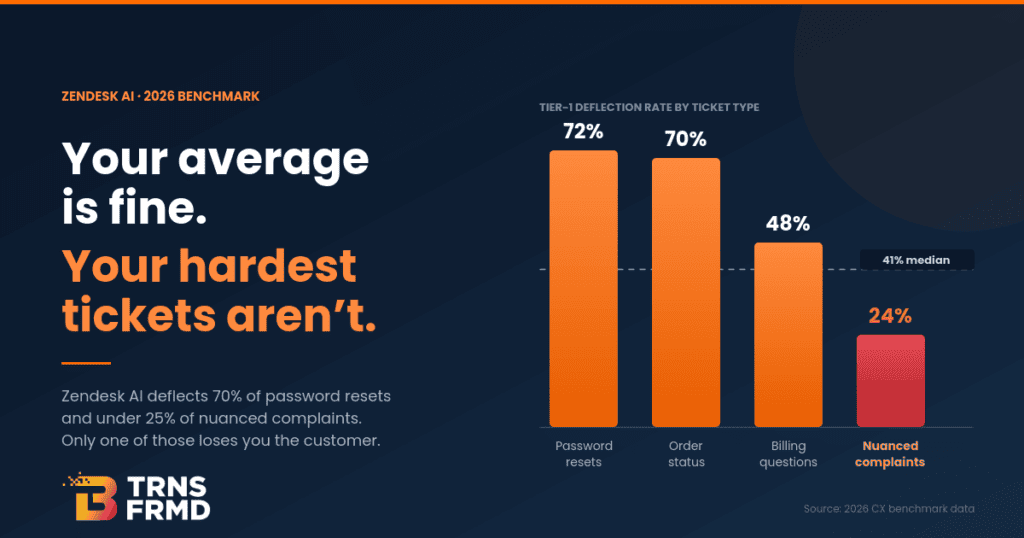
IT service desks earn their return primarily through deflection and speed: fewer tickets reaching a human, faster time to resolution, lower cost per ticket. That framing works because IT tickets are largely repeatable and low-stakes individually. A password reset is a password reset whether it happens on Monday or Friday, and the cost of getting it slightly wrong is minor.
HR, Finance, and Facilities requests do not share that profile. An onboarding request touches payroll setup, equipment provisioning, building access, and benefits enrollment in a single workflow, and a mistake in any one of those steps creates a new employee’s first negative experience with the company.
A Finance approval routes through budget authority and audit requirements that a generic IT ticket never has to consider. Facilities requests often carry a safety or compliance dimension that changes who needs visibility into the request and how quickly it has to move.
That difference means the enterprise service management ROI case for a Business Teams rollout cannot just borrow the IT service desk’s math and relabel it. The volume math still applies, but the risk math changes, and so does what counts as a win across the enterprise service management use cases IT leaders are now being asked to fund.
A Password Reset vs. an Onboarding Request: Why the Math Isn’t Even Close
It helps to walk the comparison side by side, because the difference is where most of the planning mistakes happen.

Deflecting a password reset saves a few minutes of agent time. Deflecting a poorly structured Finance onboarding request does not save minutes, it prevents a multi-day chain of rework across three departments.
Sizing the business case only on ticket volume, the way most IT teams instinctively do, understates the real value of a well-configured Business Teams workspace and overstates the risk of getting a workflow step wrong through pure self-service.
5 Configuration Choices That Make or Break the ROI
None of this argues against extending the platform. It argues for configuring it differently.
A handful of adjustments consistently separate Business Teams rollouts that deliver real enterprise service management ROI from ones that stall after a promising pilot, and the same pattern shows up across nearly every serious ESM software 2026 deployment worth studying.
- Approval chains before automation
HR and Finance workflows usually need a defined approver at each stage before any ticket gets auto-resolved. Configure the routing logic first, then layer in deflection.
- Guided workflows over static articles
A knowledge base article works for a password reset. A benefits enrollment question usually needs a guided, conditional workflow that asks follow-up questions rather than a static page.
- Delegated administration by department.
Facilities should not need to file an IT ticket to update its own workspace, and IT should not be the bottleneck for every non-technical process change.
- Integration with the systems of record.
A Business Teams rollout only pays off when it connects to Workday, ADP, DocuSign, or whatever system already holds the authoritative data, rather than becoming a second place that information has to be re-entered.
- Metrics that match the department.
First-contact resolution matters for IT. Time-to-productivity matters for HR onboarding. Track the metric the department actually cares about, not the one that was easiest to port over from the IT dashboard.
Organizations that implement it properly report up to a 63 percent reduction in manual service processing costs, a 45 percent improvement in HR transaction processing times, and typical payback periods of 14 to 22 months, with mature deployments generating cumulative five-year returns in the 300 to 450 percent range. Those numbers are not automatic. They depend on the configuration choices above, not just on turning the platform on for a new department.
The Difference Between a Pilot That Sticks and One That Quietly Dies
B-TRNSFRMD’s PATH TO OUTCOME™ methodology treats a Business Team’s expansion the same way it treats any platform engagement: every phase has to connect to a measurable outcome, not just a completed configuration checklist.
For a Freshservice for Business Teams rollout specifically, that starts with an assessment of which non-IT workflows actually carry enough volume and complexity to justify a dedicated workspace, rather than assuming every department needs one on day one.
From there, the approach mirrors what tends to separate the enterprise service management use cases that stick from the ones that quietly get abandoned: HR or Finance gets a phased rollout instead of a single big-bang launch, governance and approval logic get built before self-service gets switched on, and the team that owns the workspace gets trained to maintain it, not just to use it. That last point matters more than it sounds.
A workspace that only IT knows how to update becomes exactly the bottleneck ESM was supposed to remove, and it is the single most common reason an otherwise well-scoped enterprise service management ROI case never shows up in the following year’s budget review.
As departmental boundaries within a single platform become the norm, it’s worth revisiting whether your current contract still reflects where ESM is actually headed.
Before you renew, see our ESM renewal checklist for what to check before you sign again.
Your Next Step
If your organization is weighing whether to extend Freshservice for Business Teams beyond IT, or already has a workspace live that has not delivered the payback it promised, the fastest way to find out where the gap is comes from a direct assessment rather than another internal debate. Any credible ESM software 2026 roadmap should be able to answer that question with numbers, not assumptions.
Book a Free Assessment to see where your enterprise service management ROI actually stands.
Frequently Asked Questions
- What Is Enterprise Service Management (ESM)?Enterprise service management (ESM) applies IT service management principles, like ticketing, workflow automation, and self-service, to non-IT departments such as HR, Finance, Facilities, and Legal. Instead of separate disconnected tools, ESM unifies service delivery on one platform. Onboarding and procurement approvals are among the most common enterprise service management use cases.
- What Is Freshservice for Business Teams?Freshservice for Business Teams is Freshworks' standalone ESM product, available since late 2025 without requiring an existing IT implementation. It provides pre-built workspace templates for HR, Finance, Facilities, and Legal, each with delegated administration so departments manage their own workflows while IT retains oversight of the underlying platform.
- How Is ROI Different for HR Service Desks vs. IT Service Desks?IT service desk ROI centers on deflection and resolution speed for high-volume, low-stakes tickets. HR service desk ROI centers more on process consistency, since a single onboarding request touches payroll, access, and benefits at once. Among common enterprise service management use cases, getting one step wrong there costs far more than a slow password reset.