
TL;DR
The subscription line is the smallest number on your real support technology TCO. Legacy patient experience software keeps ticketing and contact center systems disconnected, and every gap becomes a staff hour somewhere, while bolt-on AI never gets the context to actually help. A genuinely AI-native support platform closes that gap architecturally, not just cosmetically.
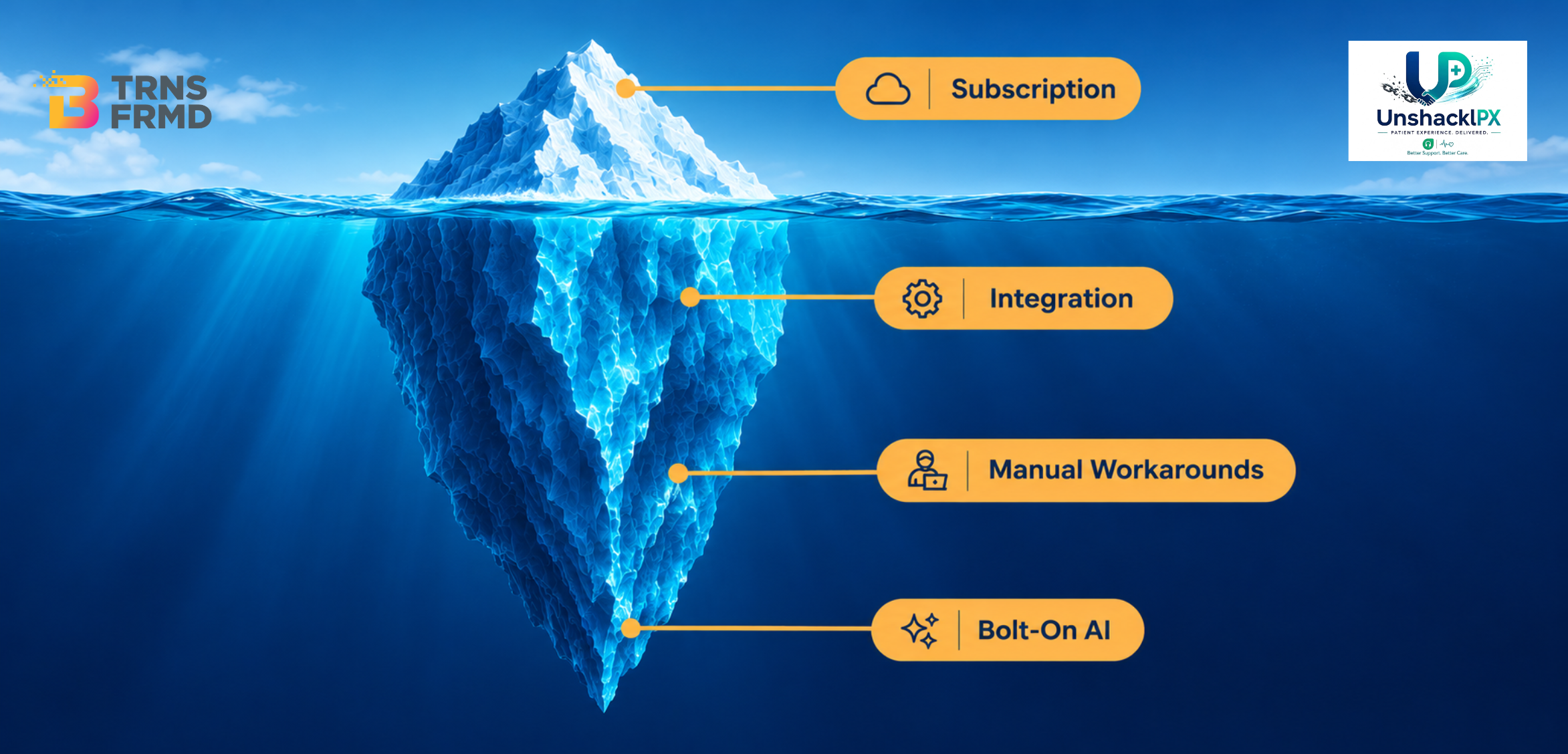
Every healthcare provider network has a number attached to its support platform. It’s usually the subscription fee, and it’s usually the only number anyone tracks closely. What rarely gets the same scrutiny is everything underneath it: the integration work between systems, the manual triage a thin team absorbs quietly, the admin hours nobody bothers logging because they’ve just become part of the job. That’s where the real healthcare support software cost actually lives, and it’s almost never what shows up on the renewal invoice.
Your Subscription Is the Smallest Number on the Invoice
Budget conversations tend to anchor on the number a vendor puts in front of you, and that number is designed to look good. It’s also incomplete. The real support technology TCO includes every hour your team spends compensating for what the platform doesn’t do natively: rekeying data between systems, manually triaging calls that should route themselves, building spreadsheets to track what the dashboard should already show.
For a healthcare provider network, that gap gets expensive fast. Patient Financial Services teams juggling billing, coding, and Workers Comp requests across disconnected tools absorb costs nobody planned for. Healthcare support software cost, calculated honestly, includes the license, the integration work, the admin overhead, and the manual labor that fills every gap the platform leaves behind.
When Your Ticketing System and Contact Center Don’t Speak the Same Language
Most legacy setups split ticketing and the contact center into two separate systems that were never designed to talk to each other. A patient calls in, an agent pulls up one screen for the phone system and another for the ticket history, and neither one has full context on the other. That gap isn’t a minor annoyance. It’s where average handle time quietly balloons and where patients end up repeating themselves to three different people.
This is the piece most patient experience software vendors gloss over in a demo. Integration between channels looks simple on a slide. In practice, it’s the single biggest driver of hidden support technology TCO, because every disconnected handoff becomes a manual workaround that someone on a thin team has to own.
The Real Price of Manual Workflows on an Already-Thin Team
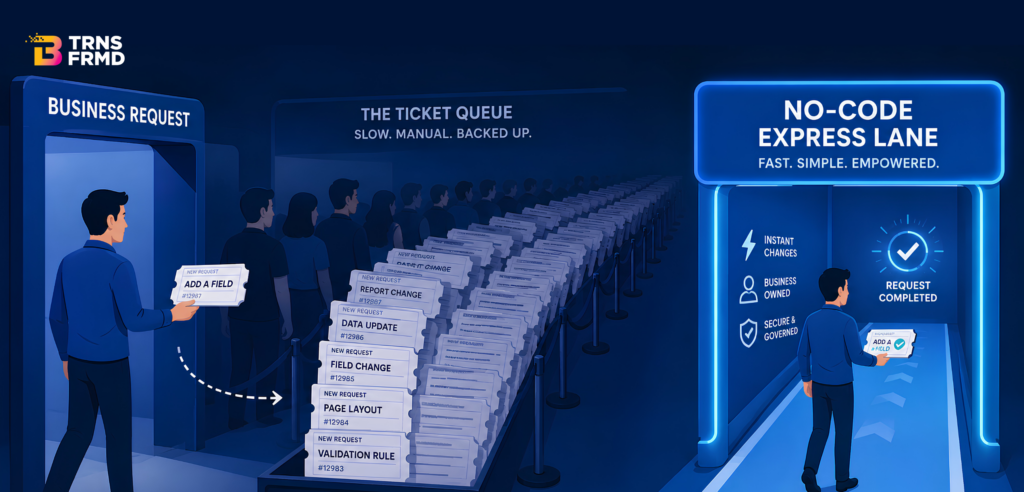
Support teams in healthcare are rarely overstaffed. When the platform can’t automate reminders, route by skill group, or flag a stalled ticket on its own, that work doesn’t disappear. It lands on whoever has bandwidth that day, and it compounds every time the network adds a location.
- No automated reminders mean follow-ups depend entirely on someone remembering to send them.
- Manual routing means billing, coding, and Workers Comp requests get sorted by hand instead of by rule.
- Minimal reporting means ops managers find out about a systemic issue only after it’s already generated a wave of calls.
None of this shows up as a separate charge. It shows up as burnout, as attrition, and eventually as a support team that can’t scale without hiring in lockstep with every new location. Tally the overtime and the turnover and the true healthcare support software cost looks nothing like what the renewal quote implied.
Why Bolt-On AI Never Actually Takes Off
A lot of platforms sell AI as an add-on module, licensed separately and configured after the fact. That structure sounds flexible. In practice, it means the AI has no native access to the ticket history, the resolution codes, or the channel data it would need to actually help. Adoption stalls, deflection stays low, and the AI line item quietly becomes one more thing the support technology TCO has to absorb without much to show for it.
This is the pattern behind most disappointing AI rollouts in healthcare support. The tool wasn’t broken. It was bolted onto a system that was never built to feed it the context it needed.
What “AI-Native” Actually Means for Patient Support
An AI-native support platform is built differently from the ground up. Every ticket, every channel, every resolution code is available to the AI natively, not exposed through a separate integration layer. That difference is what makes self-service chatbots capable of resolving routine questions around the clock instead of just deflecting the easy ones and routing everything else to a human anyway.
For a healthcare CX platform specifically, that native access matters more than usual, because patient requests carry real urgency and real compliance weight. An AI-native support platform can route a billing dispute to the right specialized team instantly, something a bolted-on chatbot layered over a legacy system usually can’t do with any confidence.
A freshdesk omnichannel setup built this way treats every channel as one continuous conversation rather than three separate logs to reconcile.
Proof in Practice: How One Network Cut Support Costs by $1.3 Million
A 200-plus location U.S. urgent care network ran patient financial services almost entirely by phone, with email tracked manually and no unified view of a patient’s history across either channel. B-TRNSFRMD rebuilt the operation into a unified healthcare CX platform, and a freshdesk omnichannel architecture became the backbone of the rebuild, replacing the old phone-and-email split with one connected system.
| Capability | Legacy State | Future State |
| Communication channels | Phone and manual email only | Phone, email, chat, and portal |
| Self-service | None | 24/7 AI chatbots with regional specialization |
| Workflow efficiency | Manual tracking, no automation | 63 automated workflows for triage and SLAs |
| Management reporting | Minimal or none | Real-time dashboards for ops and executives |
The results were measurable, not directional. The network saved $1.3 million annually through consolidated technology spend, sustained a 94.9 percent resolution SLA across more than 17,234 tickets, and resolved 1,910 bot chats a month without agent involvement. Resolution codes expanded from 19 to 30, giving leadership the granularity to catch a billing or registration issue before it generated a wave of calls instead of after.
None of that came from swapping one tool for a shinier one. It came from architecting a genuine healthcare CX platform where ticketing, chat, and telephony shared the same context instead of operating as three disconnected systems wearing the same logo. The freshdesk omnichannel foundation underneath it is what lets a patient experience software rollout of this scale actually hold together instead of becoming three more disconnected tools.
How Do You Actually Calculate Your Real Support TCO?
Most healthcare provider networks have never added up their real support technology TCO in one place. The license fee is easy to find. The integration labor, the manual workaround hours, and the AI add-on costs usually live in three different budgets, owned by three different people, which is exactly why the true number stays invisible.
B-TRNSFRMD’s TCO Worksheet, dropping September 17, is built to pull those numbers into one place so Patient Experience and IT leaders can see their actual healthcare support software cost instead of just the number on the renewal invoice. If your team has been budgeting off the subscription line alone, this is the tool that shows you what you’ve been missing.
See Where Your Own Numbers Stand
If any part of this looked familiar, the fastest way to find out what your own environment is really costing, and what your true healthcare support software cost actually looks like, is a direct conversation, not another internal audit competing for attention with everything else on your plate. Talk to B-TRNSFRMD about your Freshdesk environment to see where the real number stands.
Frequently Asked Questions
- What's included in the TCO of a healthcare support platform?A complete support technology TCO includes the subscription cost, integration work between ticketing and contact center systems, manual-workflow labor your team absorbs quietly, and AI add-on fees most organizations never itemize separately. Add them up, including any freshdesk omnichannel integration work, and the real number usually runs well past what the renewal invoice alone suggests.
- Why do healthcare orgs pay more for support tools than they need to?Bolt-on AI, disconnected channels, and manual triage all add hidden labor cost that the subscription price never shows. A patient experience software platform priced competitively on paper can still carry six figures in integration work and administrative overhead once every hidden cost gets counted honestly instead of left off the original budget entirely.
- AI Add-On vs. AI-Native Support Platform: What's the difference?An AI add-on is licensed and configured separately from the core platform, with limited access to ticket history and channel data. An AI-native support platform builds AI into every workflow from day one, giving it native access to the full context it needs to resolve requests, not just flag them for a human.
- Is Freshdesk HIPAA-Compliant for healthcare support?Yes, when configured with the appropriate HIPAA compliance package and a signed Business Associate Agreement in place. A freshdesk omnichannel deployment for a healthcare provider network needs that configuration built in from the start, not added afterward, especially once patient financial and clinical data start flowing through chat and ticketing together.
- How much can healthcare orgs save consolidating ticketing and omnichannel support?Results vary by organization and starting complexity, but they can be substantial. One 200-plus location urgent care provider consolidated onto a single healthcare CX platform and saved $1.3 million annually, while sustaining SLA compliance above 94 percent across a significantly higher ticket volume than its legacy phone-only system ever supported.
- What does “Omnichannel Patient Support” mean in practice?It means one unified view of the patient across ticketing, voice, and chat, not separate tools that don't share context. A genuinely omnichannel patient experience software setup lets any team member see the full interaction history regardless of which channel the patient originally used to reach out, without asking the patient to repeat themselves.