TL;DR
Patient volume is growing faster than healthcare teams can hire, and long holds are quietly costing you patients. An AI service desk handles routine requests on its own and passes the rest to staff with full history attached. HIPAA stays covered through the right setup, a signed BAA, and audit logs. UnshacklPX gets you there in 12 to 16 weeks without taking your patient line offline.
Ask any patient access director what keeps them up at night. Calls go up every quarter. Headcount doesn’t. The instinct is to open another requisition. An AI service desk is a better bet, because it adds capacity that doesn’t quit, burn out, or need six weeks of training.
Patients notice the gap long before leadership does. The average hold in a U.S. healthcare call center runs about 4.4 minutes, and around one in six callers gives up before anyone picks up. Patients who have a bad call experience are also over four times more likely to switch providers. So when we talk about healthcare AI support, we’re really talking about keeping patients.
The Real Bottleneck in Healthcare & Behavioral Health Support (Hint: It’s Not Your Team)
When we audit healthcare support desks, the agents are usually fine. The setup is what’s working against them. Tickets live in one system, calls in another, chat somewhere else, and none of it talks.
Here’s what that looks like on a normal Tuesday:
- An agent spends the first few minutes of every ticket just figuring out where it goes
- A patient who emailed yesterday calls today and starts from scratch
- Refill requests get lost somewhere between the pharmacy team and the front desk
- Leadership hears about recurring issues weeks late
Resolution rates tell the same story. Research affirms that first call resolution in healthcare sits at roughly 52%, and patients often call several times just to book one visit. An AI service desk goes straight at that waste. Your people get time back for calls that need a human, which matters most in behavioral health, where a repeated intake can set care back.
How AI Agents Triage Patients Without Putting HIPAA-Sensitive Data on the Line
Compliance teams always raise this first, and they’re right to. Healthcare AI support is only worth deploying if the guardrails are part of the design.
In a properly configured AI service desk, triage runs roughly like this:
- The agent reads the request and works out what it is and how urgent it is.
- Simple things, like moving an appointment or resetting a portal password, get handled on the spot. Anything clinical goes to a person.
- When it hands off, the full history goes with it.
- Every step is logged, so there’s a record if anyone needs to review it.
You need three things in place: a platform configured for HIPAA, a signed Business Associate Agreement, and tight role-based access to patient data. Patient support automation doesn’t weaken any of that. Audits actually get easier, since every action is timestamped.
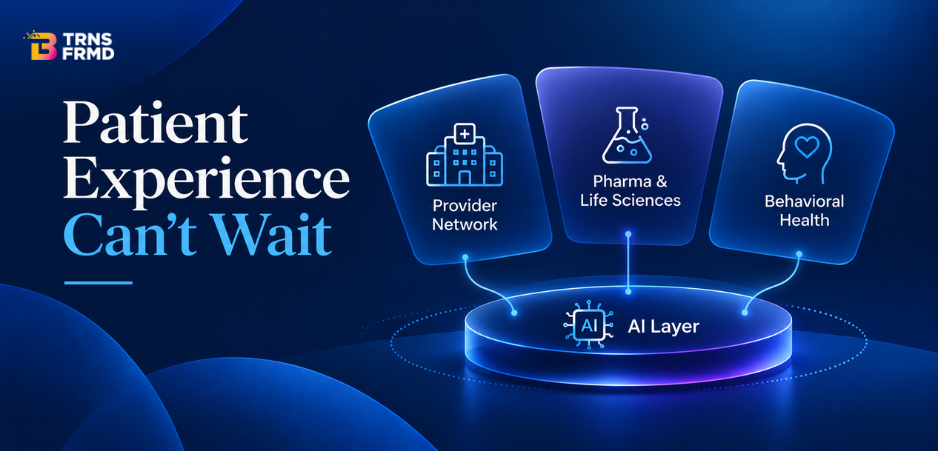
Provider Networks, Pharma & Life Sciences, Behavioral Health: Three Very Different Playbooks
A 40-clinic provider network and a pharma medical information line have almost nothing in common operationally. Patient support automation has to reflect that, or it won’t stick.
| Segment | Where It Usually Breaks | What the AI Layer Changes |
| Provider Networks | Scheduling stuck on the phone, referrals leaking between PCP and specialist, billing disputes | Self-service scheduling, automatic referral routing, billing questions sorted by type |
| Pharma & Life Sciences | Heavy HCP inquiry volume; adverse-event reports that need a clean audit trail | AI triage that documents every step and escalates on a set path |
| Behavioral & Mental Health | Sensitive intake, care teams working in silos, follow-ups that slip | Urgent requests flagged early, one shared case view, outreach based on risk |
Different problems, same goal. Healthcare AI support should let you grow with patient volume without growing payroll at the same pace.
Inside the Assess, Migrate, Activate Process (Your Patient Line Stays Open)
Cost rarely makes leaders hesitate. Disruption does. That’s why we run every engagement in stages under our PATH TO OUTCOME™ methodology.
| Phase | What We Do | What You Walk Away With |
| Assess | Review your current stack, ticket volume, integrations, and compliance needs | A real savings figure before you sign anything |
| Migrate | Move tickets, history, and workflows in stages; connect Zoom voice and chat | Audit trail intact, no patient-facing downtime |
| Activate | Set up AI agents and Copilot around how your team actually works | Routine requests resolving on their own from week one |
Most projects wrap in 12 to 16 weeks. On our Freshdesk rollouts, teams have reached full adoption within 90 days of going live.
Freshdesk + Zoom + Freshservice + Thub: What It Looks Like When the Stack Finally Talks
UnshacklPX isn’t another platform to learn. It ties four tools you may already know into one AI service desk, with AI agents working across all of them.
| Component | What It Handles |
| Freshdesk | The patient record: every case, conversation, and note |
| Zoom | Calls and chat, logged straight into that same record |
| Freshservice | Internal requests from IT, facilities, and operations |
| Thub | The AI agents that work across ticketing, the service desk, and the contact center |
Say a patient calls with a billing question. Zoom drops the call into their Freshdesk record. If it’s routine, the AI agent answers it. If not, billing gets it with the transcript already attached. If a broken payment portal caused it, Freshservice opens a ticket for IT. That’s what patient support automation looks like when it’s working end to end.
A 200+ location urgent care network that moved to this kind of setup saved $1.3M, held a 94.9% resolution SLA across more than 17,000 tickets, and now handles 1,910 bot chats a month with no agent involved. Most clients cut support tech spend by 30% or more.
Before You Post That Next Job Opening
One more hire helps for a few weeks. Patient support automation on the right stack changes the math for good. Start with our field guide, The Real Cost of a Broken Patient Support Experience. When you’re ready, book an UnshacklPX assessment and we’ll walk you through your numbers.
Frequently Asked Questions
- How can AI Agents reduce wait times for patient and member support?By pulling the easy requests out of the line. With patient support automation, appointment changes and password resets get answered instantly, so people who need a human reach one sooner.
- Is an AI-powered patient support platform HIPAA-compliant?HIPAA compliance depends on how the platform is configured and contracted, not the platform alone. An AI service desk can support it with a signed BAA from each vendor handling patient data, role-based access, and timestamped audit logs. B-TRNSFRMD reviews these requirements during the Assess phase.
- What's different about supporting Healthcare Provider Networks vs. Pharma & Life Sciences vs. Behavioral & Mental Health?Quite a lot. Provider networks fight scheduling and referral problems across locations. Pharma teams deal with HCP questions and adverse-event reporting under strict audit rules. Behavioral health needs a gentle intake and reliable follow-up, so urgent requests have to be caught early.
- What does the Assess/Migrate/Activate process look like for a healthcare support transformation?It's three stages over about 12 to 16 weeks. We start by finding your real costs, then move your data and workflows in stages while support keeps running. The AI agents get switched on last, once the data is clean.
- How does UnshacklPX combine Freshdesk, Zoom, Freshservice, and Thub into one support layer?UnshacklPX connects four tools. Freshdesk holds the patient case record, Zoom logs calls and chat into it, Freshservice handles internal IT and operations requests, and Thub runs AI agents across all three.
- How do I book an UnshacklPX Assessment?Head to unshacklpx.com and book a slot. Bring your current tools, renewal date, and rough ticket volume so we can show you where the money goes.